Showing posts with label Slasher/Horror. Show all posts

Monday, 18 March 2013

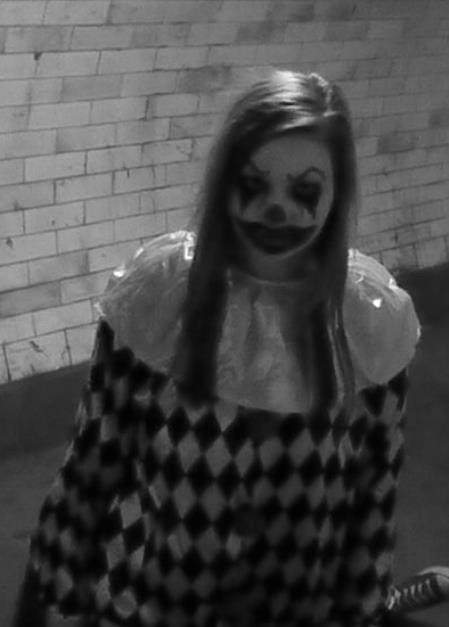
Final Costume


During the filming process, our original costume plan was altered due to issues with filming and availability.
  • Originally we had planned to include a dark suit for the antagonist of red and black to connote both danger and the spilling of blood but due to filming difficulties we chose to opt for a white and black outfit with red elements. This worked better for us due to it's visibility, enabling the clown to be seen more easily in the dark due to the lack of lighting available on location.
  • We also planned to spray the clown's hair green but due to the dark lighting of our location and the use of black and white CCTV filter in the tunnel, the colouring would have been barely visible and so therefore we chose not to include this colouring. 
  • The original face paint chosen was also altered for filming purposes, blood was added dripping from the eyes and the black around them was made larger, drawing attention towards the darkness and the unnatural features of the clowns face as to make it appear more sinister.
  • Also, we originally intended to use red contact lenses to convey supernatural inhuman elements but found again, like the hair colouring, it would have very little impact on overall shots. We also made this decision as the large quantity of red already intended in each of our shots would have caused the majority of the mise en scene to suggest bloodshed, which isn't used within this particular scene. The contrast of the pale blue eyes against the dark black and red features of the face paint also created a more startling affect, as they seem far more prominent and chilling as they stare into the camera in close up shots.

Sunday, 10 February 2013

Production Companies


1. Hammer Films
'Smart Horror'
Let Me In, Woman in Black, The Resident, Wakewood.


2.Big Talk Productions
Largely Comedy-Horror
In Fear, Hot Fuzz, Shaun of the Dead, Attack the Block

3. Lionsgate Entertainment
All Genres
The Last Exorcism, Cabin in the Woods, Haunting in Connecticut, Saw


4.BBC Films
Tormented, Fish Tank, The Awakening


5.Twisted Pictures
Saw, Dead Silence, Texas Chainsaw 3D


6. Ghosthouse Pictures
Drag Me To Hell, The Possession, The Grudge
    Produces horror thrillers, largely in the supernatural genre (usually focusing on possessions).

      Sunday, 9 December 2012

      Make-Up and Costume


       Creating Gore

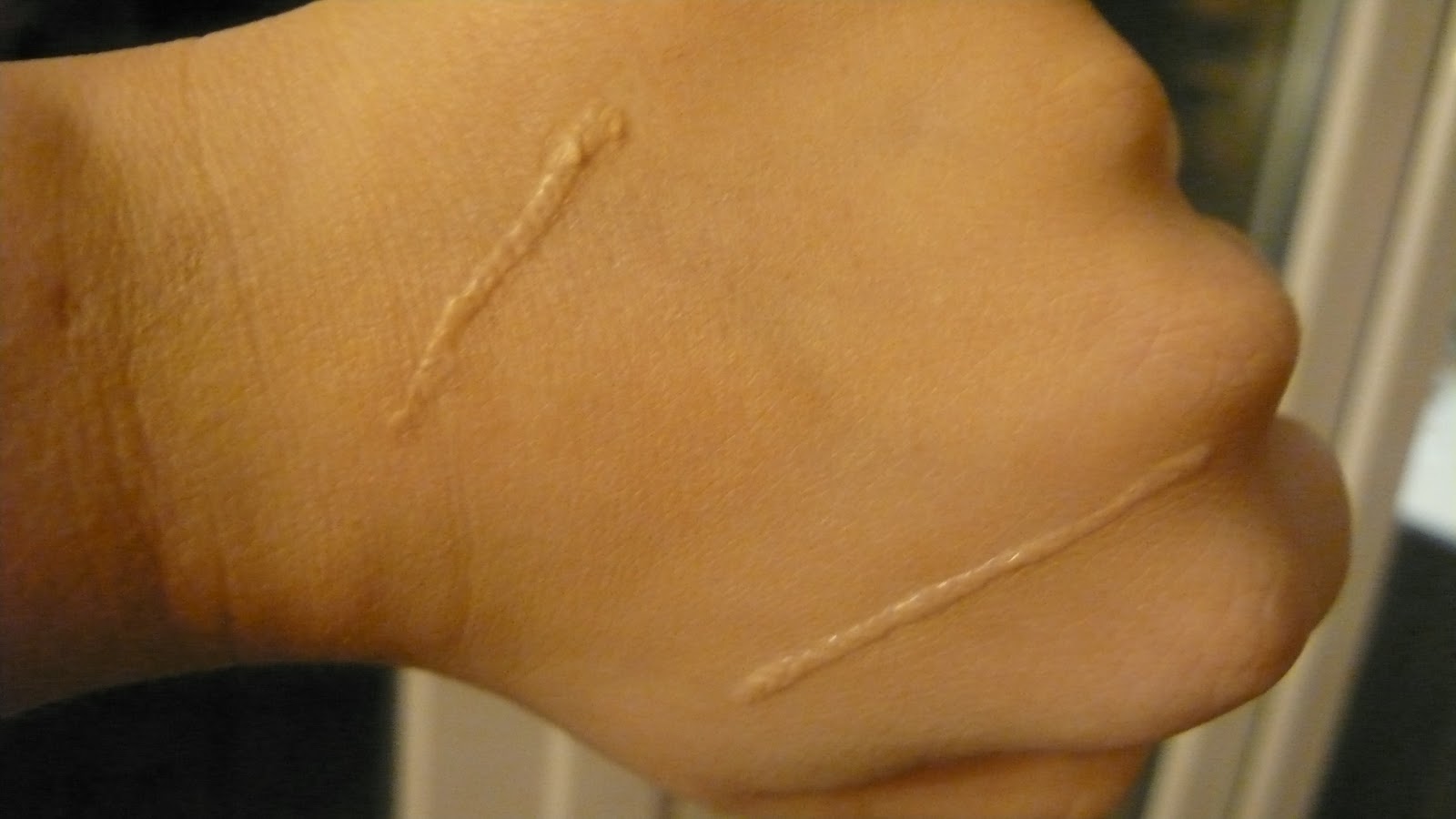
      Scars 

      This would be useful to use within a flashback scene to connect the victim (if they survive) to before/during and after they experience the attack.  
      (Made using eyelash glue and foundation.)

      Burns
      This would be useful to use if we chose not to follow the route of conventional gory deaths and decide to opt for burning injuries instead.
      (Made with theatrical wax, paints, optional fake blood.) 


      Cuts

      This would be useful to use if we chose to feature our injuries in a house/school/hospital environment and our character fell through glass or was struck with a object that could shatter. This would also be easiest to duplicate on a large scale to include an entire face and also to create the illusion of skin sliced by glass such as in Suspiria.
      (Made using theatrical wax, foundation, fake blood and plastic.)  


      Sunday, 4 November 2012

      Opening Deconstruction


      'The Noise' Opening Scene

      Camera

      • Establishing shot of the exterior of the house with shallow depth of surrounding area, isolating it from everything else around it (conforming to the conventions of an isolated location in horror) with the surrounding location only being shown in other shots, separating them.  
      • Flashback scene is used to give the audience an explanation for the opening sequence of events in which the audience are introduced to the danger instantly.
      • When the victim is seated, the footage is filmed from an overheard angle to make the character appear smaller, highlighting their weakness. The shot then switches to a close up of her face to show the audience that she is calm and content, not distressed like in the previous flash forward, which is re-enforced again when it cuts to a family photograph, representing that she her death with have specific effect on those around her.
      • When the victim answers the phone, she is filmed as a reaction shot to show her emotion as it is altered by the phone conversation. As she gets more irritated when the phone calls continue, it changes to a close up to focus specifically on her emotion. 

      Lighting
      • No light in upstairs of house, creates opposition between the light-up downstairs where the girl is safe and the dark upstairs where she is attacked.
      • Artificial red lighting used to connote danger contrasts with the safe calm white lighting of the other room within the flashback.
      Sound
      • High frequency crescendo is used to enforce emphasis of the build up towards the dangerous encounter and creates suspense. Followed by a fall after the loud contrasting slamming sound that the audience has been anticipating.As the sound falls and dies out, the diegetic sound of the torch falling to the ground becomes dominant, highlighting the reality.
      • The eerie non-diegetic sound overlay added during the flashback scene before the phone rings is used to differentiate the scene and show that although it appears to be, it is not ordinary and safe as the character on-screen believes.
      Mise En Scene
      •  Character is female and is dressed in white which represents her innocence and weakness, introduces her as the victim. The low-cut top (conforming to conventions of slasher horror films in which the most 'sexual' characters of a group are usually first to die) is used to re-enforce her femininity in contrast to the fully covered attacker who is dressed in black to connote the evil within.
      • Use of the torch within the darkly red lit room shows the difference between the victim and the situation she is in, the white representing her innocence and purity as opposed to the contaminated environment around her. The torch is also used to direct the audience's focus to everything the victim can see, enabling them to view from her point of view and empathise with her fear. When the victim drops the torch as she encounters the evil, it is used to represent her loss of any hope as she is now doomed.
      Editing
      • Jump cuts are used to show specific different items of information within the pile of paper highlight to the audience that those particular items are of relevance to the plot that will follow, drawing their attention.

      Sunday, 14 October 2012

      Scream (1996) Deconstruction

      Opening Scene: Scream (1996)


       Establishing Shot
      • Low angle shot of tree tilts down to eye level view of entire property, establishing the scene and the lack of surrounding houses, conforming to the remote location convention of a horror and also to the night-time darkness expected within a 'scary movie'.
      • Shot at a public distance; emphasis of the lack of emotional connection/empathy between the viewer and the victim onscreen.
      • Composition of diagonals used in the tree branches and of the roof of the house suggest that something is wrong in the scene, making the viewer feel uneasy despite the horizontal and vertical lines that suggest rest (applying to the victim's piece of mind and belief she is safe).
      • Despite the diegetic sounds of insects and the swing creaking (re-enforces the uneasy atmosphere to the scene as the trees show there is little wind to cause the swing to move), there is no other noise, using the silence as a typical atmospheric device within the majority of the scene to suggest 'eerie-ness'.
       "I wanna know who I'm looking at"
      • Track movement follows victim (dominant of entire scene, as temporary protagonist) down into the room at high angle making her appear smaller and increasing her helplessness.
      • The scene (excluding the dialogue) is silent to re-enforce the victim's isolation within her home and as the caller delivers his line, there is a quiet non-diegetic 'pang' sound to illustrate her recognition of the unusual situation and the camera zooms into her face to show a reaction shot.
      • As it zooms, the distance moves from informal to intimate proxemics, making the viewer uncomfortable, mirroring the violation of the victim's privacy as she understands she is being watched. 
        "Is this some kind of joke?"
      • Continuity editing is used to make the scene appear more realistic, appealing more to the viewer's fear in relation to the victim on screen's and follows the victim as she steps backward, centering her in the frame to emphasize her reaction and it's importance to her frantic actions that follow. 
      • The victim is faced at a quarter turn, making her reaction visible to the viewer without being intimate enough to create an emotional involvement between the audience and character, as is highlighted previously when the house is shot at a public distance.
      • As the dialogue progresses, non-diegetic high frequency sound builds up and then fades foreshadowing the possibility of an unexpected attack.
       "Can you see me?"
      • As she reaches the door, the victim is in sudden silence contrasting with the previous loud sounds of fast-paced anticipating non-diegetic sound overlay matching her pace as she runs to the door, creating unease as both the viewer and the victim are unaware of when the killer will strike.
      • The only diegetic sound other than the dialogue is the victim's heavy breathing which re-enforces the idea of isolation within the situation, again being positioned below eyeline to show the victim as being helpless.
      • The camera changes to an eye line match point of view shot overlooking the outer perimeter of the property through the window, causing the audience to feel the same fear as the victim and also to suggest enclosure behind the windows, acting as a barrier between the victim and the outside world.
      • She is framed at the bottom left hand side of the screen, despite being the dominant character to highlight her insignificance as a character and a person, showing her only purpose is to act as a victim to introduce the film itself.